UGC script guide 2026: what to write, what to cut
most ugc scripts are two pages too long. the part that decides the outcome is the first three seconds and one cut, and both of those are footage decisions, not writing decisions. here is the one page version, plus what dan found across 10,114 short-form videos.

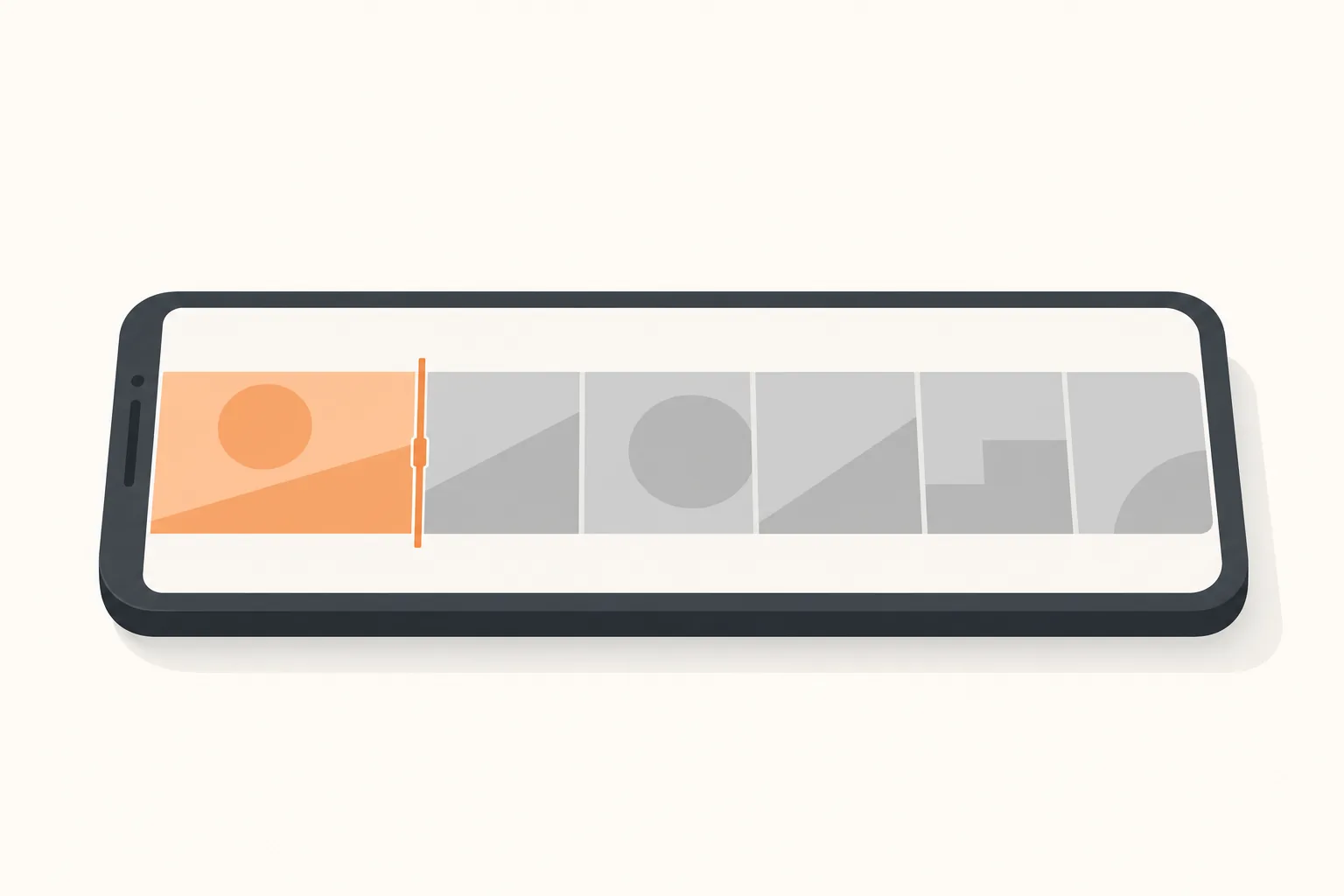
a ugc script is the written plan behind a user generated content ad: the hook line, the beats in order, the on screen text, and the shot each beat is filmed against. it should fit on one page. most of the ones we get sent run to three, and the extra two pages are where the performance quietly goes.
this is the one page version.
the uncomfortable part first
the script is not where most ugc ads are lost.
dan wrote this up after a run of product demos that flopped: "the footage was bad before anyone hit record". his split of the work is 80% setup, 20% recording, and the edit cannot rescue either.
that matters for scripting because it changes what a script is for. a script is not a piece of writing you hand to a creator and hope. it is a shot list with words attached. every line in it should name a thing the camera can see.
if a line in your script does not change what gets filmed, delete it.
what 10,114 videos said about structure
dan analysed 10,114 short-form videos and published the template that held retention. four rules came out of it:
- hooks decide the first 3 seconds, and they land in one of three shapes: problem-first, contrarian, or micro-proof
- change something by 0:02 to 0:03, with a cut, a zoom, or b-roll
- on screen text plus a demo beats a demo on its own in info-heavy niches
- clarity beats clever
that is the whole structural spec. everything below is how to actually write against it.
the one page script
five slots. nothing else.
- hook line, 0:00 to 0:03. one sentence, spoken or on screen, in one of the three shapes below
- the change, 0:02 to 0:03. a cut, a zoom, or a b-roll insert. not a word, a visual event
- the claim, 0:03 to 0:08. the single specific thing your product does
- the proof, 0:08 to 0:20. the screen, the result, the before and after
- the ask, last 2 seconds. one instruction
if you cannot fill a slot with something concrete, the slot is empty. leave it empty rather than padding it. a 14 second ad that does five things beats a 40 second ad that does three.
writing the hook, in the three shapes that work
problem-first. name the thing the viewer is already annoyed about, before you name yourself.
- weak: "introducing our new budgeting app"
- problem-first: "my bank app has never once told me why i am broke"
contrarian. take the position the audience does not expect from an ad.
- weak: "track your calories the easy way"
- contrarian: "counting calories is why you quit last time"
micro-proof. open on a number small enough to be believable.
- weak: "thousands of users love it"
- micro-proof: "i logged 41 days straight. here is what changed"
the shared property is that all three are filmable in one shot with a real face. none of them need a set, a voiceover artist, or a second location.
that clip is a problem-first opening with no dialogue at all. the confusion is the hook line. we queried the library on 19 august 2026 and there are 11 clips of someone reacting with confusion in a car, which is the point: the shape is a casting choice, not a writing one.
the 0:02 change is a footage line, not a copy line
this is the rule that gets skipped, because it is the only one that costs something.
by the third second something on screen has to be different. a cut to a new angle, a punch-in, or a shot of someone reacting. holding one framing through the first five seconds is the single most common structural failure we see, and no rewrite of the hook line fixes it.
the cheapest way to buy that change is a reaction clip. you are not buying a performance, you are buying two seconds of a different human face at a different focal length.
that one runs 6 seconds and costs $5 in the b-roll library. it is the entire 0:02 slot, filmed, delivered, cleared for commercial use.
on screen text: write it last, and write less
the rule from the 10,114 video set is that on screen text plus a demo beats a demo alone in info-heavy niches. fintech, health tracking, productivity, anything with a number on the screen.
what that does not mean is subtitling your own voiceover.
- one line at a time
- under 7 words
- it says something the audio does not
- it changes when the shot changes
if the text is a transcript, cut it. it is competing with your own footage for the same two seconds of attention.
what to delete from the script you already have
- the greeting. "hey guys" is 1.2 seconds of your 3 second hook window
- the product name in the first line. earn it by second 8
- adjectives with no number behind them
- the second and third claim. one ad, one claim
- stage directions the creator will ignore anyway
- anything a viewer would have to rewind to understand
costing it out
a script is free to write and expensive to film, which is why the structure above pushes every decision toward footage you can buy rather than footage you have to produce.
so the practical shape of a scripted ugc ad is:
- hook and 0:02 change: bought as reaction b-roll from $5 a clip in the b-roll library
- claim and proof: your own screen recording, filmed by you, free
- the ask: one line of on screen text
that is a real ad for the price of two clips. full pricing is here, and if the beat you need is not in the library, custom orders start at $9 per video with a 20 video minimum.
questions people actually ask
how long should a ugc script be?
one page. five slots. if it runs past a page you are writing a video that will get cut in the edit anyway.
do i write the script or does the creator?
you write the structure and the claim. the creator writes their own words inside it. a script that forces someone to read your sentences out loud is the fastest way to make real footage look fake.
how many scripts do i need per month?
more than one, and fewer than you fear. the hook is the variable worth testing, so write one script and five hook lines rather than five scripts.
does the script matter more than the creator?
no. the structure above is roughly fixed. who says it, and how their face moves in the first second, is where the variance lives. that is the reason we sell footage rather than templates.
the short version
- the first 3 seconds and the 0:02 cut decide the outcome. both are footage decisions
- pick one hook shape: problem-first, contrarian, or micro-proof
- one claim, one ask, five slots, one page
- on screen text says what the audio does not
- if a line does not change what the camera sees, delete it
browse the reaction clips in the b-roll library, or start from a package if you want the whole hook set in one go.
Ready to get UGC videos for your brand?
Real human creators, 48-hour delivery, full commercial rights. Starting at $9/video.