HeyGen alternatives in 2026: the option the listicles skip
search "heygen alternative" and google returns nine ai video generators, heygen's own comparison page, and one reddit thread. every result sells the same thing heygen sells. this is the honest read on when another generator is right, and when the answer is not a generator at all.

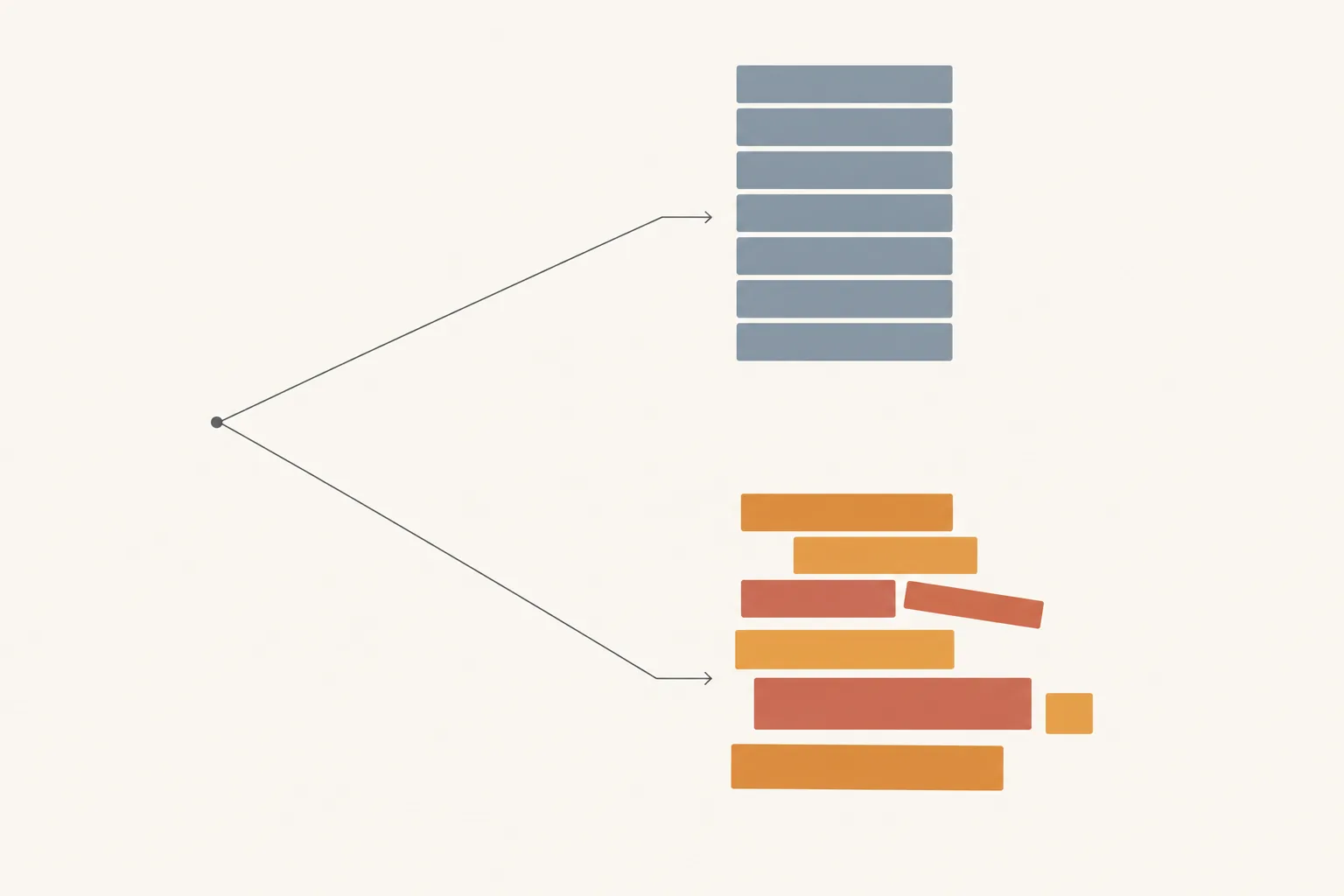
a heygen alternative is any tool or supplier that gets you video without heygen's ai avatars. the honest answer splits three ways: another avatar generator, a different kind of generator, or real human footage. which one is right depends on whether you need scale in languages, scale in explainers, or a first two seconds that actually holds attention.
that is the decision. the rest of this page is how to tell which one you have.
what the results page actually shows
we pulled the live results for "heygen alternative" on 16 august 2026.
- position 2 is a reddit thread
- position 3 is a generator whose title leads with "without avatars"
- position 4 is heygen itself, ranking on its own comparison page
- positions 6 through 14 are seven more ai video tools, most of them numbered best-of lists
- there is an ai overview at the top, and a video carousel
two things fall out of that shape.
the first is that reddit sits at position 2. people searching this are not looking up a definition. they have already decided to leave, and they want another buyer's read before they commit to the next tool.
the second is the part worth pausing on. every single organic result is an ai video generator, and each numbered list is written by one of them. so the search returns nine variations of the same product category, ranked by who wrote the best list about themselves.
if you are leaving heygen because the avatar did not perform, that page hands you eight more avatars.
when heygen is the right tool and you should keep it
worth being straight about this, because the anti-ai argument usually gets made badly and falls apart the moment someone has a real job to do.
avatar generators are genuinely good at four things:
- localisation. the same script in twenty languages, lip synced, without twenty shoots.
- volume explainers. internal training, onboarding, product walkthroughs, documentation that changes quarterly.
- copy iteration. rewrite a line, rerender, no reshoot and no creator to rebook.
- compliance edits. regulated wording that has to change on a deadline.
if your bottleneck is any of those, stay on a generator. the listicles at positions 8 through 14 are answering your question, and you can stop reading here.
what the other generators are actually for
if you do want another generator, the useful split is by job rather than by feature count. based on how each one positions itself on that results page, not on our own testing:
- one leads on long form without avatars
- one is built for training teams
- one is built for product demos
- the rest are general purpose best-of roundups
we have not run a controlled test against these tools and we are not going to invent one. what we can tell you is what the category has in common, because that is the part that decides whether switching helps you at all.
every one of them renders a person who does not exist, performing a script you wrote.
the option that page does not contain
there is a third answer, and no result on page one sells it, because none of them can.
stop generating the person. buy footage of a real one.
this matters most for paid social, which is the job heygen gets bought for and then quietly fails at. an explainer can afford a rendered presenter. a feed ad cannot, because a feed ad is competing for the half second before a thumb moves.
here is what that looks like at scale rather than in theory.
a solo builder is running 10 million views a month on reaction clips with no ai footage in the pipeline, published 10 august 2026:
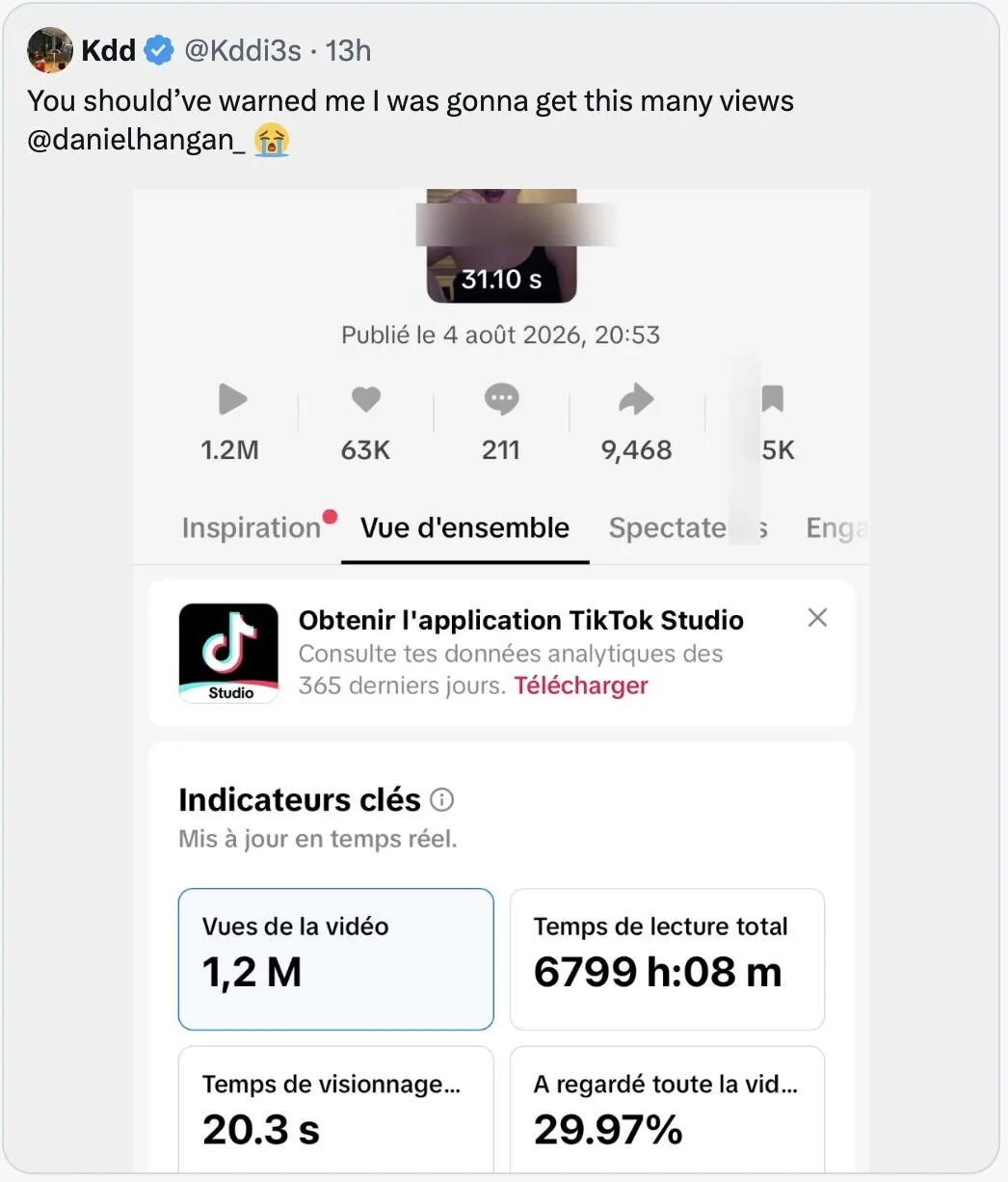
one person, no crew, no generator seat. the throughput argument for avatars is that a render button scales and humans do not. that number is the counterexample.
on the cost side of the same trade, dan's position is blunt: instead of paying $10 an ad for ai ugc, pay a small creator in eastern europe $4 a video for the real thing, posted 14 november 2025. the generator is not the cheap option. it is the expensive one that also does not hold attention.
the measured hook-rate comparison, a customer's own account average against reaction clips, is written up in full in ai ugc against real human ugc. it is one number from one customer and we do not dress it up as a study.
why a rendered face loses the first two seconds
"real footage converts better" is not an argument on its own. this is.
a hook is not a face. it is a reaction, the half second where someone visibly feels something about your product. confused. shocked. caught off guard.
a generator produces a face. it cannot produce the moment, because the moment is unscripted by definition.
so you get footage that looks correct and holds nobody. clean light, right ratio, dead eyes. and the audience reads it: dan's version is that gen z cringes at ai footage, and it feels cheap even though you paid $10 for it, posted 8 october 2025.
here is what the other thing looks like. angelika, 12 seconds, 90 out of 100 on internal virality scoring:
watch what actually holds you. it is not the lighting or the framing, both of which any competent render matches now. it is that her face changes three times, and you cannot predict the moment it does.
same property, different register. eliza, 14 seconds, 82 out of 100. confusion and frustration, then a flip to surprised and playful:
across the library, clips scoring 85 and up almost all share that property: something shifts inside the clip. the flat ones, well lit and competently shot and single expression, sit at 45 to 65. a render does not reliably produce the first kind, because the thing that makes it work is the part nobody scripted.
what it costs against a generator seat
the pricing comparison is the part that usually decides it, and it does not go the way people expect.
dan has published the two ends of this repeatedly. ai ugc at $10 per video, posted 25 september 2025, against $5 per video from real humans, posted 21 may 2026.
the b-roll library holds 5,217 clips from 403 creators, filterable by emotion. 498 surprised, 343 confused. counts measured 12 august 2026.
at $5 a clip with full commercial rights and no subscription, 20 reactions costs less than one day of most teams' ad spend. packaged sets group them by emotion if you would rather not pick individually.
what you do not get is a script engine, a language switcher, or a rerender button. if you need those, buy the generator. that is the actual dividing line, and it is not about which one is better.
volume is not the thing a generator is uniquely good at. the 10m views a month above came out of a library of real clips, not a render queue.
how to choose
pick another generator when:
- you need the same script in more than one language
- you are producing training, onboarding or documentation video
- your copy changes weekly and reshooting is the blocker
- a consistent presenter across a library matters more than attention
buy real footage when:
- the first two seconds carry the ad
- you are running paid social rather than owned channels
- you are testing hooks rather than testing copy
- your last batch of rendered ads looked correct and still died
most app teams that arrive at "heygen alternative" after a disappointing ad test are in the second group and keep shopping in the first.
faq
what is the best heygen alternative? it depends on the job. for multilingual explainers, another avatar generator is the right category and the roundups on that results page cover it. for paid social hooks, the alternative that changes the outcome is real human reaction footage, because the failure was the rendered performance rather than the tool.
is there a free heygen alternative? one result on page one positions itself on a free tier. we have not tested it and will not rate it. free matters less than whether the output holds attention in the first two seconds.
why did my ai ugc ads stop working? usually because the hook was rendered. a generated face can be lit correctly and framed correctly and still show nothing happening. the fix is testing a real reaction against it on the same account, which is the only comparison that settles it.
can i use real footage and a generator together? yes, and that is the common setup. real reaction clips for the first two seconds of paid social, rendered video for localisation and explainers. they are solving different problems.
how much does real ugc cost compared to heygen? $5 per clip with full commercial rights and no subscription, against the $10 per video dan has published for ai ugc. there is no seat fee and no monthly minimum, so the comparison is per asset rather than per plan.
what is the smallest useful test? one recording of your product doing one thing, paired against 20 different reaction hooks. that isolates the hook as the variable, which is the only comparison that answers anything.
Ready to get UGC videos for your brand?
Real human creators, 48-hour delivery, full commercial rights. Starting at $9/video.